Kaivalyadhama

Mindful Living Series: Conversations on Family, Being & Belonging

Part II: Family, Conflict, and the Search for Balance

Continuing our exploration with Shri. Subodh Tiwari, we delve into questions about collective healing, environmental consciousness, and finding equilibrium in our fast-paced world. The conversation moves from personal healing to global concerns, while maintaining focus on practical applications of yogic wisdom.

Q. How can yoga support families recovering from trauma, such as displacement due to wars or natural disasters?

“There was a very good experiment in the Eastern Europe countries including part of Russia, and now in places like Manipur,” Shri. Subodh Tiwari began, describing how yoga practices helped people deal with displacement and mental trauma. The key, he explained, lies in practices like Stitapragynatha that bring people from future or past to the present moment. Philosophy may not make any dent for someone who has lost their families, loved ones or been displaced.

“Trauma is reminiscing your past and anxiety of future,” he noted. Rather than philosophical explanations, he emphasized how simple practices – few asanas, pranayamas, meditation – can anchor someone in the present, even if just for 5-10 minutes initially. Over time, this builds capacity for healing.

Q. How does yoga help address the challenges of climate change, both emotionally and practically?

Shri. Subodh Tiwari traced environmental degradation to its root in human desire, particularly the shift from need to greed, which can be justified in 10 ways. He emphasized how yoga principles like aparigraha – be happy with what you have, and awareness can help address environmental challenges. Through examples ranging from tribal wisdom to modern environmental movements, he illustrated how awareness and balance are key.

In discussing humanity’s relationship with the environment, Shri. Subodh Tiwari invoked the concept of Kleshas—the five root causes of suffering described in yogic philosophy. At the heart of environmental destruction, he explained, lies Avidya—ignorance or misperception.

“Avidya is not merely a lack of knowledge,” he said, “but a fundamental misunderstanding of our connection with nature. When we see ourselves as separate from the environment, we act as though we can take from it endlessly without consequence.” He described how Asmita (egoism) fuels consumerism, how Raga (attachment) and Dvesha (aversion) drive excessive consumption and waste, and how Abhinivesha (fear of change) keeps societies locked into unsustainable habits. “The environmental crisis,” he said, “is not just about resources—it is about mindset. And mindsets can be transformed.”

He urged a shift from desire-driven consumption to mindful stewardship. “When you see the earth as an extension of yourself, you will care for it as you care for your own body.”

He explained this with the example from the regions of Panchgani and Wai. He spoke of how certain areas remain ecologically balanced due to historical wisdom, particularly in places where land ownership comes with strict preservation mandates. “In Wai and Panchgani, there are lands that, once bought, cannot be sold outside the community,” he explained. “This ensures that the land remains in the hands of those who respect and nurture it rather than being exploited for commercial gain. When greed is limited by tradition, balance is preserved.”

Q. How do you think yoga helps families cope with the emotional toll of global conflicts and wars, particularly for young children and younger adults?

Shri. Subodh Tiwari introduced the principle of pratyahaar – the ability to remain unaffected by external stimulus at will, like a turtle withdrawing into its shell. However, he emphasized this isn’t about helplessness but about conscious choice. “It’s not helplessness. That is the ability of pratyahaar,” he explained.

He also stressed the importance of responding rather than reacting, connecting this to the concept of chitta (consciousness) and its vrittis (modifications). Through these principles, families can maintain harmony and synthesis whether dealing with local, national, or global conflicts.

Q: How do you make children understand yogic principles?

Shri. Subodh Tiwari emphasized that teaching children requires a different approach than adults. “Children have higher energy,” he explained. Rather than philosophical explanations, he advocated for experiential learning through stories and practical experiences. “The philosophy they will not understand. The stories they will understand.”

He shared how traditional teaching methods often involved creating practical experiences rather than direct instruction. For instance, he recalled his own childhood experiences of being sent on multiple small errands throughout the day – a practice that naturally instilled discipline and awareness. “Morning go and get milk. After one hour go and get ice. After one hour go and get curds,” he remembered, explaining how these simple tasks helped build character and understanding.

Q. In today's "hustle culture" where 14-hour workdays are glorified, how can yoga help redefine success?

Rather than offering a one-size-fits-all solution, Shri. Subodh Tiwari emphasized the importance of recognizing individual prakruti (nature) while maintaining balance. “We have to acknowledge and understand the individuality,” he explained. Referring to himself, he said, “I am rajas, I have to work hard or else it could go bonkers.” Similarly its different for others. But its important to note that being busy doesn’t necessarily indicate internal turmoil. The key lies in awareness and finding one’s own synthesis of work and well-being.

Shri. Subodh Tiwari linked this to Avidya, explaining that ignorance is not merely a lack of information but an inability to integrate truth into one’s lived experience – “A smoker knows smoking is harmful. A person who is overweight knows that they should change their eating habits. But this knowledge has not yet reached their conscious level… Often, it is only when faced with a terminal illness that realization fully takes hold.”

He introduced the concept of samyama (balance) and how it helps individuals find their own equilibrium without comparing themselves to others.

Q. With increasing disconnection and loneliness, especially among younger generations, how can yoga help rebuild community bonds?

Shri. Subodh Tiwari distinguished between aloneness and loneliness, introducing the concept of ‘pranti darsha’ (false perception). He emphasized how yoga practices can help break the cycle of virtual connections that often deepen isolation. The solution, he suggested, lies in practical engagement through community work, seva (service), and sports – activities that create real connections.

He stressed the importance of family and community culture in addressing isolation: “It’s not the individual who is also responsible here. A setup of the family and peer matter around.” The practice of yoga, he explained, helps develop the discipline and awareness needed to maintain healthy boundaries with technology while fostering genuine human connections.

With this wisdom, the conversation with Shri. Subodh Tiwari came full circle. The challenges of the modern world—conflict, ambition, trauma, isolation—are not separate from us. They are within us. And so, too, is the capacity to meet them with clarity, strength, and grace.

~ Interviewed by Ritika S

The Science of Everything: In what ways has the world and the universe been shaped by women

Science and philosophy in the universe, as well as in our thought processes, coalesce into a single entity and as such, can be found at every single nook and corner of the universe. It is not an isolated discipline, but instead part of a grand puzzle that incorporates everything from the rhythm of music to the movement of galaxies and the healing practice of yoga. For centuries, these realms have been influenced by people who not only tried to make sense of the world, but were also trying to comprehend existence in its entirety. This includes women who have always worked in the background and achieved marvellous things, from integrating science and philosophy to uncovering the secrets of the universe.

Mathematics: The Skeleton of the Universe

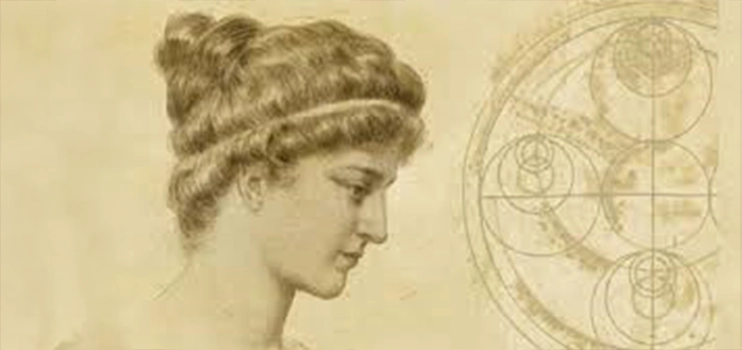
The enigma surrounding polygons and calculations has always been mesmerizing, an intrigue that goes beyond what is captured within textbooks. It is a form of communication that encapsulates the single smallest atom as well as the gargantuan universe. In the past, Hypatia of Alexandria was one of the first to break the fences of mathematics by combining philosophy with geometry and astronomy. She paved the path to science and aided in the discovery of the universe, demonstrating the fact that numbers have patterns and the sole purpose of the universe is to reveal them. (Hypatia of Alexandria)

Now, let us talk about Shakuntala Devi, the “Human Computer” who could solve problems of the highest degree of mathematics in just a few seconds. She was never an ordinary person; her skills illustrated how mathematics is more than abstract numbers but a way of philosophically seeking patterns and order in nature. Katherine Johnson, the exceptional mathematician at NASA, was the one who calculated the paths of the flights that took humans to the moon, which proved that math is not only the backbone of the cosmos but our world as well.

Art and Music: The Science of Creativity

Art and music have traditionally been observed as expressions of creativity; domains where emotions and instinct reign. But the present age has its reasons for doubting such perceptions because the science of these art forms is crystal clear. There is a structure in the beautiful combination of notes, rhythms and colours, a structure that exists in the universe. The renowned M. S. Subbulakshmi, the legendary Carnatic singer did not just sing; she wielded the mathematics present in the ragas and understood how each note has frequency patterns that touch the soul.

A great example of using a modern approach to ancient Tibetan music is Nun Ani Choying Drolma, who’s not only a nun but also a musician. She and others like her treat this form of art as a form of science, blending ancient practices with the modern world, in such a way that it creates a healing bridge uniting the mind, body, and spirit. Choying’s music acts as a modern day science, spiritually setting the world in harmony. Sowing the seeds of a greater movement, Drolma and her peers exemplify the beauty that exists at the intersection of art and science

Yoga: From Rishis of the Past to Women Masters of Today

Rishis, also known as sages, utilized everything including Yoga to comprehend the essence of humanity. Yoga was once exclusive to Rishis as it was intended to be a sacred practice. This is now a tale of the past because over the years, much like everything else, it has evolved and been accepted as a global practice. The introduction of women into the field enables them to take on multiple roles as teachers, researchers, and primary healers. The first Western female disciple of Krishna Macharya, Indra Devi is credited with planting seeds for the modern day global trend of Yoga. Along with that, Geeta Iyengar utilized her philosophical viewpoint to portray yoga’s science behind healing, especially to women.

Women yoga practitioners like Dr. Hansaji Yogendra and Seane Corn are still working to demonstrate that yoga does have physical and mental healing properties using a blend of ancient philosophies and contemporary science. Yoga is as much about self-discovery as it is about physical exercise. It is this self-reflection that proves yoga is a mixture of philosophy and science; a tethering of the internal and external worlds.

Medicine and Science: Female Healers and Creators

Women have always been the healers who knew the miracle cures which nature has to offer. The advent of radioactivity by Marie Curie is one of the pivotal moments that defined the trajectory of science and medicine. The invention further made X-ray and cancer treatment a possibility. Curie’s work went beyond pure scientific basis and dived into the philosophy of healing which serves as a source of inspiration for all scientists.

Dr. Soumya Swaminathan, who served the WHO as a Chief Scientist and Dr. Kiran Mazumdar-Shaw, founder of Biocon are great examples of current day wonders in the biotechnology domain seeking to cut down the cost of quality health care. Their work is a brilliant example of how philosophy and medicine go hand in hand with innovation serving the purpose of bettering humanity.

Women in Space and Technology: The Horizon Seekers

The intersections of space and technology have always been a man’s world. However, women have played an important role from the very beginning of space race to today’s age of Artificial Intelligence and Educational Technology. Dr. Tessy Thomas, the first woman missile scientist from India, and Dr. Ritu Karidhal, the ‘Rocket Woman of India,’ have spearheaded the ambitious space missions of India which shows that one can be a philosopher and a scientist too.

In the same manner, Divya Gokulnath, the co-founder of BYJU’S has changed the face of education technology for the better, showcasing how her understanding of life transcends surface level data material. She proves that learning is both deeper and philosophical.

Women Leadership in Yoga Research and Education at Kaivalyadhama

Kaivalyadhama, a pioneer in blending yoga’s ancient wisdom with modern scientific rigor, stands as a testament to the transformative leadership of women in advancing holistic knowledge. Today, the institution is guided by visionary women leading its key divisions: the Scientific Research Department is headed by Dr. Praseeda Menon, Gordhandhas Seksaria College of Yoga is led by Dr Bandita Satapathy, and Mrs. Bharati Kawade is the principal of the school, Kaivalya Vidya Niketan. These leaders embody the institute’s mission to harmonize tradition and innovation, ensuring yoga’s therapeutic and philosophical depths are validated through cutting-edge research and accessible education 216.

The Unified Science of Everything

The women determine the development of science, philosophy, and art. They have not only added to our comprehension of the world, but have also illustrated to us the art and science of how everything works hand in hand. From the mathematics found in nature to the transformational power of yoga, the advancements in the fields of medicine and technology, science is indeed looking for the truth and philosophy brings life to science by seeking the origin thereof.

In their findings and imparting of knowledge, these women have inspired us not only to pursue it at a higher level but also demonstrated that knowledge is muddled and ranges from personal to discipline. The universe does not only surround us with a bunch of facts, but there lies immense beauty waiting to be explored for those who indeed want to understand it thoroughly. The women above and beneath all of us continue to seek the truth and show us the correct path towards achieving a more peaceful but deeper understanding of everything.

~ Written by Ms. Deepa Yadav
(An MA student at Gordhandhas Seksaria College of Yoga, Kaivalyadham)

Your Gut is Talking-Are You Listening?

From gut healing to food combinations: In Conversation with Ms. Dimple Jangda

The journey to wellness often begins with a single step – a step away from the conventional and towards ancient wisdom that has stood the test of time. We had the privilege of hosting Ms. Dimple Jangda at our Sattvic Ahaar Conference held in Mumbai. She is a beacon of holistic health wisdom who has transformed countless lives through her deep understanding of Ayurveda and gut health.

As the founder of Prana Healthcare Centre and a National Bestselling Author, Ms. Dimple’s journey from investment banking to becoming a celebrated Ayurveda and gut health coach is testament to the transformative power of following one’s true calling. Her groundbreaking book “Heal Your Gut, Mind & Emotions” has not only topped charts but has also opened new pathways for those seeking authentic wellness solutions.

In an illuminating conversation, Ms. Dimple shared profound insights about healing, wellness, and the wisdom of listening to our bodies. Her responses, rooted in ancient knowledge yet perfectly aligned with modern needs, offer a fresh perspective on health and healing.

Q. What recurring patterns do you see in people who successfully heal their gut versus those who struggle?

“The simplest solution is changing your lifestyle and dietary habits,”

~ Ms. Dimple reveals

She explains how gut health issues progress from simple symptoms like bloating and gas to more complex conditions if left unaddressed. The key lies in early intervention and being proactive rather than reactive. Those who succeed in healing their gut address these early warning signs rather than waiting for advanced symptoms to develop.

Q. How can people differentiate between genuine wellness practices and marketing hype?

“Genuine wellness practices are those that have withstood the test of time,”

Ms. Dimple emphasizes.

She points to Ayurvedic rituals that have proven their worth over millennia:

“Something like an Ayurvedic ritual like oil pulling, gargling, brushing, tongue scraping, abhyangam, nasyam – these are practices that have been followed for almost 5,000 years.”

A trending diet is generally flashy, new and promising miracle results in 7 days, whereas ancient wisdom that is time tested, like eating seasonal foods and maintaining meal timings, carries the weight of generations of experience. Ms. Dimple notes that marketing hypes often come tied to specific products or services, while genuine wellness practices stand independent of brand names.

Q. When someone is eating "healthy" but still feeling unwell, what crucial elements are they usually missing?

Ms. Dimple highlights a crucial oversight in modern healthy eating: “The combinations could be wrong.” She introduces the concept of ‘virudh aahar’ – the science of food combinations. Imagine having the world’s finest orchestra players but seating them randomly and asking them to play without coordination. The result? Chaos, not symphony. Similarly, even the healthiest ingredients can create discord in our body when improperly combined.

“Something as simple as mixing fruits with dairy leads to bloating, gas, flatulence, indigestion, toxicity in the gut, and can even lead to allergies and skin issues.”

This explains why that “healthy” smoothie bowl with yogurt and fruits might not be serving you as well as you think! The key lies not just in what we eat, but in understanding how different foods interact within our unique body constitution.

Q: How do you help people distinguish between their body's true needs and conditioned cravings?

“Your body’s true needs would be desire for fruits, for vegetables, for grains and pulses,”

~ Ms. Dimple explains.

She draws an interesting parallel between seasonal cravings and conditioned ones. When you crave watermelon in summer, that’s your body’s intelligence at work. But when you can’t function without your morning chai, that’s more likely an addiction masquerading as a need.

Think of it like the difference between being truly hungry versus eating because you’re bored or stressed. True bodily needs align with nature’s rhythms – craving warm soups in winter or cooling foods in summer versus conditioned cravings, which act on whims and cravings, regardless of what’s actually good for the body.

Q. In our high-stress world, which traditional food principles become even more relevant and why?

“In a high stress world, the number one rule is to always eat cooked foods,”

~ Ms. Dimple advises

She emphasizes mindful eating practices: “Sit down quietly, peacefully and eat your food. Use your five fingers instead of using a spoon and fork. This allows messages to go from your fingers to the brain on what kind of digestive juices to produce.”

In our world of desk lunches and Netflix dinners, these traditional principles become anchors of wellness. It serves as a reminder that this nourishment goes beyond mere calorie intake.

Q. How do you help families navigate different dietary needs while maintaining connection through food?

Ms. Dimple outlines the three phases of life and their dietary needs: Kapha (0-14 years), Pitta (14-40 years), and Vata (40+ years). It’s like having different instruments in an orchestra – each plays its own part, but together they create harmony. A growing child needs their protein-rich foods like a developing plant needs more water, while a senior might need more fiber-rich foods like a mature tree needs different nutrients.

The beauty lies in understanding these differences while maintaining the shared experience of meals. It’s possible to serve the same basic meal with mindful modifications – perhaps less spice for the children, more fiber-rich additions for the elders, and moderate portions for the adults in their Pitta phase.

Q. How do you help people trust their body's signals again after years of ignoring them?

“The first thing I would recommend is doing a Panchakarma treatment, where you do a complete cleanse of your body,”

~ Ms. Dimple suggests

Think of it as resetting your body’s communication system. Just as we occasionally need to restart our phones to clear the glitches, our bodies sometimes need a reset to clear the static in our internal communication lines.

This isn’t just about physical cleansing – it’s about relearning our body’s language. When we clear away the interference of toxins and unhealthy bacteria, our body’s true signals become clearer

The Path Forward

The wisdom shared by Ms. Dimple Jangda resonates deeply with our mission of promoting holistic wellness through time-tested practices. Her insights remind us that true health is not just about what we eat, but how we eat, when we eat, and our relationship with food itself. It’s about rediscovering the ancient wisdom that can guide us toward better health.

Ready to begin your own journey of discovery and healing? At Kaivalyadhama, we’ve been guiding seekers on this path since 1924, combining ancient wisdom with modern understanding. Visit www.kdham.com to explore our programs and take the first step toward a more balanced, mindful approach to health.

~ Interviewed by Ritika S

Mindful Living Series: Conversations on Family, Being & Belonging

Part I: Family Harmony in the Digital Age

In an intimate dialogue with Shri. Subodh Tiwari, we explored the intersection of ancient yogic wisdom and modern family life through a series of questions that probe both philosophical depths and practical challenges of contemporary living like loneliness, mental health and LGBTQ+ issues.

Q. What fundamental principles from ancient yoga texts can guide people in family harmony? How can we apply these principles today?

Shri. Subodh Tiwari pointed to the Yamas and Niyamas—the ethical and self-disciplining principles laid out in the Yoga Sutras of Patanjali.

“The beauty of these principles,” he explained, “is that they do not ask for mere intellectual acceptance. They must be practiced, absorbed. Only then do they take root—not as rules imposed from the outside, but as qualities that emerge naturally from within.”

Ahimsa (non-violence), Satya (truthfulness), Aparigraha (non-possessiveness)—these are not just lofty ideals but quiet forces that, when embraced, shape the atmosphere of a home. When family members embody them, harmony ceases to be something pursued and instead becomes something that simply is.

“True transformation is silent,” he said, “it does not announce itself; it simply manifests”.

Q. but what of those who carry the weight of the past? The wounds inherited, the patterns repeated?

“This is where practice comes in,” he said, drawing from the wisdom of Ishvarapranidhana — surrender.

“You cannot intellectualize your way out of pain. You must dissolve it, not dissect it.” He compared the mind to a river. “If the waters are turbulent, you cannot see the riverbed. But when the waters are still, clarity emerges.”

Stillness is cultivated through practice —meditation, breathwork, contemplation. And in that stillness, something shifts. What once seemed impossible to forgive, impossible to forget, begins to lose its weight. Letting go is not an act of force; it is the natural consequence of inner stillness.

Q. In light of today's digital distractions, how can families cultivate meaningful communication?

Here, Shri. Subodh Tiwari introduced two vital principles: Santosha (contentment) and Aparigraha (non-attachment).

“You can use your laptop very judiciously, do good work and contribute,” he explains. “The problem isn’t the technology – it’s our compulsive attachment to it.”

We need to understand that right now we are having a conversation which is family oriented and we need to put the laptop/phone aside.

The practice of these principles needs to be collective and conscious, involving discussion, awareness, and participation from all family members. Whether through structured sessions, self-discipline, or motivated discipline, the key is to find a balanced approach that acknowledges both the benefits and limitations of technology.

Q. How can traditional yoga bridge intergenerational conflicts, especially regarding modern issues like gender identity and sexual orientation?

Drawing from the sutra “Maitri Karuna Mudito Peksha Nam,” Shri. Subodh Tiwari emphasized friendliness, compassion, and acceptance. He pointed out how Indian culture has historically recognized diverse identities, noting that acceptance rather than judgment is key to bridging generational gaps – “…to accept another,” he said, “you do not need to agree with them. You only need to see them fully.” He reminded us that acceptance is not tolerance—it is the recognition of the divine in another, beyond labels, beyond conditioning.

In this way, whether navigating generational conflicts, shifting gender identities, or evolving social norms, the principle remains the same: see beyond difference.

Rulers and colonisers have created narratives and societies adopt them and it becomes difficult to question these narratives. Shri. Subodh Tiwari drew upon historical examples, tracing back to ancient civilizations where acceptance was woven into the social fabric. He spoke of texts that acknowledged diverse identities, of temples that honored all beings, of societies that once thrived on inclusion rather than division. “We have not discovered new ways of being,” he noted. “We have merely forgotten the old ones. There is nothing to be ‘done’-it needs to be undone”. He jokingly concluded by saying (singing) “We don’t need no education”.

Q. How can families address anxiety and mental health challenges, moving beyond dismissive attitudes like "what is depression, do morning walks and you are good"?

Shri. Subodh Tiwari introduced two crucial qualities: stithapragnyatha- be in the present and Drishtabhav – the ability to look at oneself objectively and the capacity to view situations without judgment.

“You have the ability to look at yourself objectively. Then it enhances your ability to look at everything, every person without being judgmental,”

he explained.

Shri. Subodh Tiwari spoke of passion and dispassion which arises out of judgement. “Step back and observe…When we remove judgment,” he explained, “we create space for true understanding.” This simple but profound shift allows us to replace dismissal with compassion, love and affection reaction with response.

He emphasized that intellectual understanding alone isn’t sufficient – action and practice are essential.

“Intellectualism leads to justifying every inability with a philosophical attitude,”

he cautioned, which seems to be the biggest problem. Instead, he advocated for a balance between vision and action.

In Part II of our conversation

We’ll explore Shri. Subodh Tiwari’s insights on healing from collective trauma, addressing climate change through yogic principles, and finding balance in our hustle culture. We’ll also discuss his thoughts on rebuilding community connections in an increasingly isolated world in the next edition. Stay tuned!

~ Interviewed by Ritika S

Beyond the Battlefield: The Home Front

On Army Day 2025, we spoke with Lt. Gen. A K Singh, a retired General Officer Commanding-in-Chief of the Southern Command in the Indian Army. Having commanded troops in various challenging environments, and now being associated with Kaivalyadhama, he has a rare dual perspective. His insights transcends traditional narratives of military power, emphasizing the crucial role of holistic well-being in fostering true combat effectiveness. Here is a summary of the discussion.

Beyond Brute Force: Cultivating Inner Strength

The Indian military is no longer solely focused on developing physical prowess. Recognizing the profound impact of mental fortitude on battlefield performance, the armed forces have embraced yoga as a cornerstone of holistic soldier development. No longer a fringe activity; it’s being systematically integrated into training regimens, to harness the power of breathwork, meditation, and mindfulness techniques to manage stress, improve sleep, and enhance their ability to remain calm under pressure.

This newfound inner strength translates into improved decision-making, enhanced situational awareness, and a heightened sense of self-mastery – crucial attributes for navigating the complexities of modern warfare.

Project Udbhav: Rediscovering India's Military Heritage

Project Udbhav was launched on October 21, 2023, with the aim to rediscover and re-evaluate India’s rich military heritage. This initiative, alongside the growing emphasis on yoga within the armed forces, reflects a broader shift towards a holistic approach to military training. By integrating ancient wisdom with modern military science, both Project Udbhav and the embrace of yoga contribute to the development of well-rounded warriors – individuals who are not only physically formidable but also possess the mental and emotional resilience necessary to navigate the complexities of modern warfare.

A Global Model for 21st-Century Warfare

The Indian military’s pioneering approach to soldier development is attracting global attention. As Lt. Gen. A K Singh highlighted,

“Most Western countries, especially during joint exercises, have requested to include yoga.”

This recognition underscores the growing understanding that true military strength lies not just in superior weaponry, but in the mental and emotional fortitude of its personnel. The Indian Army, by embracing yoga and rediscovering its own ancient wisdom, is setting a new global standard for military excellence – a model that prioritizes holistic well-being, inner peace, and the cultivation of a warrior spirit that transcends the battlefield.

The Family Unit: India's Hidden Military Strength

While addressing how yoga has helped military personnel, Lt. Gen. A K Singh emphasized the profound connection between a soldier’s well-being and the support of his family. He said,

“A soldier would be that much more motivated to do his best when he knows his family is well.”

Taking the focus back home, military families face unique challenges – long separations, frequent relocations, and the constant undercurrent of worry. Yoga, as implemented in military communities, provides these families with more than just stress relief. It offers a framework for resilience, a way to maintain emotional balance during deployments, and a means of staying connected despite physical distance.

Looking Forward

“If you are able to still your mind,” Lt. Gen. Singh notes, “the conflicts will cease by themselves.” In an era where military challenges are increasingly complex, he believes this approach to warrior preparation – one that addresses both external skill and internal balance – might be India’s most significant contribution to modern military thinking.

As the sun sets on another Army Day, the Indian military, rooted in a tradition of restraint and peaceful resolution, is forging a new path. By integrating yoga and ancient wisdom, it cultivates a unique brand of strength: one that emphasizes inner fortitude, ethical conduct, and a commitment to safeguarding national interests while fostering regional peace and cooperation.

~ Written by Ritika S

Mindfulness in the Age of Distraction

Finding Your Center in a Digital World

In a world where our attention is the new currency, finding stillness has become both a challenge and a necessity. Our smartphones ping incessantly, social media feeds scroll endlessly, and the digital world demands our constant presence. Yet, amidst this chaos, an ancient practice offers a timeless solution: mindfulness.

The Digital Dilemma: Why Your Attention Matters

Our modern existence pulses with digital demands. Studies reveal we check our phones 58 times daily – that’s 58 interruptions to our natural flow. While technology connects us globally, it often disconnects us from ourselves. Multitasking, once worn as a badge of honor, actually reduces our productivity by 40%. But beyond statistics lies a deeper truth: our perpetual digital engagement is reshaping our capacity for genuine presence.

Finding Your Center: Simple Steps to Mindful Living

Mindfulness isn’t about escaping this reality; it’s about engaging with it more consciously. Think of it as training your attention muscle. Just as we exercise our bodies, our awareness needs deliberate strengthening. Here’s how to begin:

  • Start with breath awareness- three conscious breaths before unlocking your phone
  • Practice mindful moments, like savor your morning tea without screens
  • Create digital sanctuaries by designating phone-free spaces in your home
  • Embrace single-tasking – give one activity your complete attention

Integrating Ancient Wisdom with Modern Medicine

On the integration of scientific yoga therapy and conventional approaches, Maxine is clear: “Western medicine saved my life – no question. But yoga provided the tools for deep healing. While medicine works from the outside in, yoga and pranayama work from the inside out. Together, they create a powerful approach to recovery and wellbeing.”

Now a yoga therapist herself at a yoga studio in London, Maxine works with cancer patients and others seeking healing through yoga. “Whether it’s someone with cancer, diabetes, or an advanced yoga student, the principles of yoga therapy remain the same. It’s about connecting with your body’s wisdom and building trust in yourself step by step.”

The Science of Serenity

Modern research validates what ancient wisdom has long known: mindful practices reduce stress, enhance focus, and build emotional resilience. When we cultivate awareness, we’re not just changing our habits – we’re rewiring our brains for greater peace and clarity.

Mindfulness isn’t about perfection – it’s about progress. Like waves in an ocean, thoughts will come and go. Your role is simply to observe, acknowledge, and return to your center. Each moment of awareness is a step toward inner harmony.

A Community of Consciousness

While mindfulness is a personal journey, you’re not alone. Join our growing community of mindful practitioners who are choosing presence over autopilot, wisdom over distraction, and inner peace over digital noise.

Ready to begin your mindfulness journey? Explore our workshops and retreats where ancient wisdom meets modern science, Click Here.

~ Written by Ritika S

Healing Through Ancient Wisdom: A Cancer Survivor’s Journey to Healing through Yoga

Doctor Said I’d Never Have Kids After Chemo. Yoga Proved Them Wrong

On World Cancer Day (February 4), we sat down with Maxine Levy to reflect on her remarkable journey of healing through yoga therapy. Maxine’s story stands as a powerful testament to the transformative potential of integrative approaches to cancer recovery. From battling stage four lymphoma to becoming a certified yoga therapist at Kaivalyadhama, her journey illuminates how ancient yoga traditions can work hand-in-hand with modern medicine

“It was a complete shock,” Maxine recalls of her diagnosis. “One moment I was cycling around London, living a full life in my mid-30s, and the next, I was flat on my back with a stage four high grade Hodgkin’s lymphoma.” The transition from an independent professional to a cancer patient was jarring. “Your world becomes very small. Every ounce of bandwidth focuses on your next appointment, your next medication.”

She emphasizes that every person’s journey through cancer and therapeutic yoga is uniquely their own – there’s no one-size-fits-all approach to yoga for cancer recovery.

What Drew Maxine to Yoga Therapy during her Recovery Journey?

When asked about her introduction to yoga therapy, Maxine shared that during her recovery, she found herself drawn to yoga and pranayama, though initially for simple, practical reasons. “I couldn’t go to the gym or work. Yoga became something to do.” What began as a way to fill empty days transformed into a sanctuary of yoga wellness.

“It became my safe space where I didn’t have to think about being a ‘cancer patient.’ You don’t need to know anything; you just show up and breathe.”

The practice offered something unique – a yoga healing community without the burden of conversation. “It’s alone time without being lonely,” she explains. “Nobody’s asking you questions. You don’t have to explain yourself. You can just be.” This space for “being” proved crucial in her recovery journey, providing a counterbalance to the clinical aspects of cancer treatment.

Defying Medical Predictions: Maxine’s Pregnancy Journey

When asked about her pregnancy story, which defied medical predictions, Maxine shared, “After chemotherapy, doctors said I would never have children. But through therapeutic yoga and Ayurvedic practices, guided by my teacher Tiwariji (a student of Swami Kuvalayananda and the current Chairman of Kaivalyadhama), my body began healing in ways that surprised everyone. My daughter is now 22. It taught me that healing has many dimensions beyond what we can measure.”

Integrating Ancient Wisdom with Modern Medicine

On the integration of scientific yoga therapy and conventional approaches, Maxine is clear: “Western medicine saved my life – no question. But yoga provided the tools for deep healing. While medicine works from the outside in, yoga and pranayama work from the inside out. Together, they create a powerful approach to recovery and wellbeing.”

Now a yoga therapist herself at a yoga studio in London, Maxine works with cancer patients and others seeking healing through yoga. “Whether it’s someone with cancer, diabetes, or an advanced yoga student, the principles of yoga therapy remain the same. It’s about connecting with your body’s wisdom and building trust in yourself step by step.”

A Message of Hope and Healing

Her message to those beginning their healing journey with yoga is both practical and profound: “Don’t worry about knowing everything. Just start with basic pranayama and asanas. Get into action. Yoga therapy offers a beautiful segue into feeling better and choosing life. While you absolutely need medical guidance, yoga helps you become your own guide in the healing process.”

As we conclude our conversation, Maxine’s humility shines through as she emphasizes that nothing she shares is of her own creation. “All of this wisdom, these therapeutic yoga practices, and understanding come from my teachers and the ancient yoga traditions they represent,” she says. Her final perspective, gained from decades of both personal practice and teaching yoga therapy, resonates with timeless wisdom: “There is always something you can do until your last breath. The real magic lies not in dramatic transformations but in the simple, consistent practice of showing up for yourself, breath by breath, day by day.”

Join the Journey of Healing

Maxine’s journey is a testament to the power of programs like SOHAM: Immersive Healing Program, which are designed to help individuals reconnect with their inner wisdom and embark on their own healing journeys. These programs, rooted in ancient yogic traditions, offer a structured path to holistic wellbeing, blending yoga therapy, pranayama, and Ayurvedic practices.

If Maxine’s story resonates with you, consider exploring this program. The next session begins on 2nd March 2025, offering a transformative experience for those seeking to heal and thrive. Learn more and register at SOHAM: Immersive Healing Program

~ Interviewed by Ritika S

Finding Your Path: Vivekananda’s Wisdom for Today’s Youth

Finding Your Path: Vivekananda’s Wisdom for Today’s Youth

Have you ever felt lost or unsure about your future? Well, you’re not alone. Even someone as great as Swami Vivekananda went through the same struggles when he was young. He had doubts, asked tough questions, and wasn’t always sure where his life was heading.

But here’s what makes his story special — he discovered something important: being young isn’t about having everything figured out. It’s about building a strong mind and a healthy body to face whatever comes your way.

Poonam from Uttarakhand studies yoga at Kaivalyadhama and she shares,

“When I read about Swami Vivekananda’s early life, it hit me — everyone goes through tough times. What matters is how we use these challenges to grow stronger.”

One of Swamiji’s most surprising ideas was about sports.

He said, “ you might get closer to heaven by playing football than by reading religious books!”

What he meant was simple — taking care of your body is just as important as developing your mind. Engaging in practices like yoga at Kaivalyadhama can be a wonderful way to nurture both.

Today, the young face all kinds of challenges — from stress about studies to worry about jobs. But Vivekananda’s message is simple and powerful,

He said “Take up one idea. Make that one idea your life”.

The idea is to focus on one goal at a time and give it your all.

Think of it like planting a seed. Every challenge you face is like water and sunlight — it might seem tough at first, but with dedication and patience, it helps you grow stronger. This National Youth Day we remember — the power each young person has to shape their own future.

Academic Programs 2025–26: Applications are now open for yoga programs at Gordhandas Seksaria College of Yoga and Cultural Synthesis, Kaivalyadhama, Lonavala.  Click here to enroll.

An Education Beyond Four Walls

An Education Beyond Four Walls

When does real learning begin? When a book is opened in front of you? When you want to google or ask ChatGPT questions? Maybe it’s in those magical moments of pure, unbridled curiosity.

Reet, just two years old, hovers at the edge of her home’s doorway, her shy demeanor masking an intense curiosity. The place beyond the threshold of the house is a vast new world of limitless possibilities and questions. They flow like water — endless, unpredictable, profound. “Why do the shadows follow us?” “How do trees grow?” “Why can’t I lick the dogs back?” These questions are windows into a mind discovering the world.

Curiosity is the most powerful curriculum. It’s important to understand something crucial: education isn’t about filling a vessel. It’s about keeping the fire alight.

Yoga comes early into this journey. Not as a fitness regime, but as a way of seeing. Breathing becomes more than an involuntary action — it becomes a grounding mechanism.

At school, a five-year-old becomes involved in her learning. Beyond academics, she learns to notice her breath, to feel the rhythm of her body — A gentle morning yoga routine that awakens the body and mind; or Sukshma Vyayama that consists of warm-up exercises to boost blood circulation and flexibility. Simple poses like Tadasana sharpen focus, while Katichakrasana help stretch muscles and improve posture. The practice concludes with Om chanting, creating a sense of calm and positive energy to start the day.

As she progresses, she uses pranayama breaks during exams, learns resilience, and stress management becomes a way of being instead of a “skill”.

For this journey to truly flourish, society plays a critical role. It’s not about grand gestures or proclamations. It’s about creating small, consistent spaces of support — these are the quiet architects of a society. It’s about creating an ecosystem where curiosity can breathe, where learning is a shared adventure.

This National Girl Child Day, let’s not just “save” girls. Let’s “listen” to them. After all, as Patanjali taught, “When the student is ready, the teacher appears.”

The girls are ready. Are we?

Amidst the tranquil Sahyadri hills, our school, Kaivalya Vidya Niketan, blends academics in tandem with the wisdom of yoga. As we continue this journey of growth, we remain grateful for the support that helps sustain our vision of education rooted in balance and well-being. Click here to support our cause.

Building a Support System: The Importance of Emotional and Social Support During Cancer Treatment

Receiving a cancer diagnosis can be an overwhelming experience, affecting individuals not only physically but also emotionally and spiritually. During this challenging time, seeking social support from friends and family is vital, as these connections play a crucial role in coping and facilitating long-term recovery. A strong support network is not just beneficial; it is essential for enhancing the overall well-being of cancer patients. Let’s explore how this invaluable support system can positively impact their journey to healing.

The Role of Emotional Support

If there’s one thing that can help cancer patients find strength, comfort, and courage during these challenging times, then it’s emotional support. Being able to share thoughts and feelings with loved ones can alleviate anxiety and promote a sense of belonging. Not just that, having supportive friends and family can help patients maintain a positive mindset, have open conversations about fears and concerns, and have a better understanding with healthcare providers.

The Power of Social Support

While emotional support is essential for helping cancer patients cope with stress and anxiety, social support plays a crucial role by providing practical help and companionship. Here, friends and family can assist with daily chores, cooking, and other responsibilities so that patients can focus on healing. Additionally, they can also participate in activities like meditation and yoga with friends to improve their mood and create a more relaxed atmosphere.

The Perks of Yoga

Yoga for cancer has also been proven to be an effective complementary treatment for patients. It can enhance both physical and emotional health in several ways. Practicing yoga poses can help maintain strength and flexibility during treatments and reduce stress and anxiety with practices like chakra meditation that can help patients stay present and focused at all times.

Specialised programs on yoga for cancer patients are also created by healthcare providers to create a safe environment for practice. By focussing on gentle movements like relaxing techniques and breathwork, cancer patients can connect with their emotions and bodies.

Conclusion

Despite the significant improvements in mental health and quality of life among cancer survivors, yoga therapies remain under discussed. Now is the time to bring attention to this important subject and encourage others to join the conversation.

Be a part of Kaivalyadhama’s 11th International Conference on Yoga in Cancer Care to explore the healing potential of yoga. From December 4th to 7th at Kaivalyadhama Lonavala, we will bring together multidisciplinary experts, including regulatory bodies, cancer survivors, caregivers, and nutritionists, to address various dimensions of human well-being and highlight the benefits of yoga for disease management, yoga for diabetes, etc.

The 11th International Conference on Yoga in Cancer Care

The 11th International Conference on Yoga in Cancer Care (Scope, Evidence and Evolution) is an event dedicated to exploring the integration of yoga as a complementary approach in cancer care. Bringing together renowned experts, researchers, and practitioners, the focus of this conference is to discuss the latest evidence-based practices, innovative therapies, and the future role of yoga in supporting cancer treatment and recovery. Hosted at Kaivalyadhama, this conference will be focussing on multiple aspects like the transformative power of yoga as a holistic self-care tool, its impact on physical, emotional, and psychological well-being, and its role in improving the quality of life for cancer patients and survivors.

Read more here: https://kdham.com/11th-international-conference-2024/

Take the next step towards better cancer care—join us for an event that blends science, healing, and community. This is your chance to connect with global experts, discover cutting-edge insights, and explore the profound impact yoga can have on cancer treatment and recovery. Whether you’re a healthcare professional, researcher, or simply passionate about holistic well-being, this conference is an opportunity to be part of meaningful change. Register here and contribute to shaping a future where yoga and modern medicine work hand-in-hand to improve lives, from December 4th to 7th at Kaivalyadhama Lonavala.

About Kaivalyadhama

Founded by Swami Kuvalayananda in 1924, Kaivalyadhama is one of the world’s oldest and most renowned yoga institutes. Rooted in the teachings of Patanjali’s Ashtanga Yoga, we are dedicated to preserving and sharing the true essence of traditional yoga and its healing benefits.

Blending ancient wisdom and modern science, Kaivalyadhama has pioneered groundbreaking research that scientifically validates the therapeutic benefits of yoga. Our mission is to spread the profound knowledge of yoga to people across the globe, promote holistic well-being and empower individuals to lead balanced and healthy lives.